IMEPET (Imepitoin)
100 mg / 400 mg
Tablets
Antiepileptic Drug for Oral Use in Dogs Only
Description
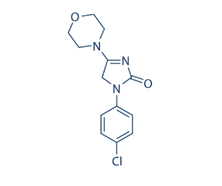
IMEPET (Imepitoin) is supplied as oblong, half-scored tablets containing 100 mg or 400 mg of imepitoin per tablet. Imepitoin, a benzimidazole derivative, exhibits antiepileptic effects by partially agonizing GABA_A receptors and inhibiting excessive neuronal activity. The chemical name of imepitoin is 4,5-dihydro-6-[2-(4-methoxyphenyl)-1H-benzimidazol-5-yl]-5-methyl-3(2H)-pyridazinone. The chemical formula of imepitoin is:
Indications
IMEPET is indicated for the treatment of primary epilepsy in dogs, reducing the frequency of generalized seizures caused by primary epilepsy. It may be used as monotherapy or in combination with other antiepileptic drugs, depending on the individual case.
Dosage and Administration
IMEPET is a tablet, and the dosage is calculated based on the dog’s body weight.
- For Epilepsy:
Treatment with IMEPET should begin at a dosage of 10 mg per kg of body weight, administered twice daily. If seizures are not adequately controlled after one week, the veterinarian may increase the dosage by 50-100% at a time, up to a maximum of 30 mg per kg of body weight twice daily. - For Noise Phobia:
IMEPET may be used at a dosage of 30 mg per kg of body weight twice daily, starting 2 days before the anticipated noise event and continuing throughout its duration. - Administration Method:
The tablets may be given directly by mouth or mixed with a small amount of food, ensuring the dog fully consumes the dose. Tablets are scored, and the calculated dosage should be accurate to the nearest half-tablet increment. Administer doses approximately 12 hours apart (e.g., morning and evening).
Contraindications
IMEPET should not be used in the following cases:
- Dogs allergic to imepitoin or any of its excipients.
- Dogs with severe hepatic or renal impairment.
- Non-primary epilepsy (e.g., epilepsy caused by metabolic or toxic conditions).
Warnings
User Safety Warnings: This medication may cause dizziness, drowsiness, or nausea. In case of accidental ingestion, particularly by children, seek immediate medical attention and present the package insert or label to the physician. To prevent accidental ingestion, close the bottle cap immediately after removing the required number of tablets for a dose.
Animal Safety Warnings: Store IMEPET in a secure location out of reach of dogs, cats, and other animals to prevent accidental ingestion or overdose. Use only in dogs diagnosed with primary epilepsy. At 3 and 5 times the recommended dosage, prolonged administration may lead to neurological behavioral abnormalities in healthy dogs.
Adverse Reactions
IMEPET is relatively safe, with side effects being uncommon.
However, some dogs may experience the following after starting treatment:
- Drowsiness or lethargy
- Decreased appetite
- Mild vomiting or diarrhea
If persistent gastrointestinal issues occur, ensure the dog remains well-hydrated.
More serious side effects requiring immediate veterinary attention include:
- Behavioral abnormalities (e.g., aggression or extreme restlessness)
- Loss of coordination or abnormal gait
- Jaundice (yellowing of gums or whites of the eyes)
- Increased seizure frequency
If these side effects appear after administration, contact a veterinarian immediately.
Clinical Pharmacology
IMEPET is rapidly absorbed following oral administration, with a bioavailability of approximately 70-80%. Concurrent administration with food may slightly reduce absorption. It is metabolized in the liver into active metabolites, primarily excreted via bile and subsequently in feces. The half-life of IMEPET in the bloodstream is approximately 1.5 hours, while its metabolites have a half-life of about 3 hours. Plasma protein binding is 85-90%, which may affect dogs with hypoproteinemia or those receiving drugs with high protein-binding affinity.
Storage Information
Store at 20° to 25°C (68° to 77°F), with short-term temperature excursions permitted between 15° and 30°C (59° to 86°F).
How Supplied
IMEPET Tablets:
- 100 mg / 400 mg, oblong half-scored tablets, 30 tablets per bottle.
Manufacturer
Egn Veterinary Laboratory
Product of India
Marketed by
Generic Animal Drugs Thailand Co., Ltd
Address: Nuanchan 25 Alley, Nawamin, Bueng Kum, Bangkok, Thailand
Email: info@petsgad.com
Generic medication and its counterpart to have the same active ingredients, strength, quality, route of administration, and safety standards.All of our products are produced in GMP factories, Your pet’s health is our top priority.
Revised: August 2023
Please read the following information before administering IMEPET to your dog and review it each time the prescription is refilled to stay updated. This summary is provided as an overview and does not replace instructions from your veterinarian. Consult your veterinarian if you have questions or need more information about IMEPET.
What is IMEPET?
Imepitoin is an antiepileptic drug primarily used in veterinary medicine to treat primary (idiopathic) epilepsy in dogs. Imepitoin works by partially agonizing GABA_A receptors in the brain, which enhances the inhibitory effects of the neurotransmitter GABA, thereby stabilizing neuronal activity and preventing excessive electrical discharges that lead to seizures.
Primary Epilepsy in Dogs:
Imepitoin is widely used as a first-line treatment for dogs diagnosed with primary epilepsy, a condition characterized by recurrent, unprovoked seizures with no identifiable underlying cause (e.g., no metabolic, toxic, or structural brain issues).
It helps manage generalized seizures and can be used as a monotherapy or in combination with other antiepileptic drugs like phenobarbital or potassium bromide, depending on the dog’s response.
Noise Phobia in Dogs:
Imepitoin is also indicated for the short-term management of noise phobia or anxiety triggered by loud sounds (e.g., fireworks, thunderstorms). In this context, it is administered at a higher dose starting a few days before the expected noise event and continued throughout its duration, helping to reduce fear-related behaviors and stress.
What are the Indications for IMEPET?
Imepitoin is an antiepileptic drug used in veterinary medicine, primarily in dogs, with specific indications based on its ability to control seizures and manage anxiety-related behaviors. Below are the main indications for Imepitoin use in animals:
Treatment of Primary (Idiopathic) Epilepsy in Dogs:
Primary Use: Imepitoin is indicated for the management of primary epilepsy, a condition characterized by recurrent, unprovoked seizures without an identifiable underlying cause (e.g., no structural brain lesions, metabolic disorders, or toxin exposure).
Purpose: It reduces the frequency and severity of generalized seizures, such as tonic-clonic seizures, in dogs diagnosed with this condition.
Application: Imepitoin can be used as a monotherapy (standalone treatment) or as part of a combination therapy with other antiepileptic drugs (e.g., phenobarbital or potassium bromide) if seizure control is inadequate with a single drug.
Why It’s Indicated: Its mechanism of enhancing GABAergic inhibition and stabilizing neuronal activity makes it effective for long-term seizure management in dogs with idiopathic epilepsy.
Management of Noise Phobia in Dogs:
Secondary Use: Imepitoin is indicated for the short-term treatment of noise phobia or noise-induced anxiety, such as fear responses to loud sounds like fireworks, thunderstorms, or gunshots.
Purpose: It helps alleviate anxiety-related behaviors (e.g., trembling, pacing, hiding, or excessive vocalization) by exerting an anxiolytic (anxiety-reducing) effect at higher doses.
Application: Treatment typically begins 2 days before the anticipated noise event and continues throughout its duration, providing temporary relief from stress and fear.
Why It’s Indicated: The drug’s partial agonism at GABA_A receptors calms the brain’s fear circuits, making it suitable for situational anxiety triggered by predictable noise events.
What are the Side Effects of IMEPET?
Imepitoin is an antiepileptic drug primarily used in dogs to manage primary epilepsy and noise phobia. It works by regulating GABA_A receptor activity in the brain to control seizures and alleviate anxiety, and it is generally well-tolerated with relatively few and mostly mild side effects. However, as with all medications, Imepitoin may cause some adverse reactions. Below are the potential side effect symptoms that may occur in animals:
Common Side Effects (Mild and Transient):
- Drowsiness or lethargy
- Decreased appetite
- Vomiting
- Diarrhea
Less Common Side Effects:
- Ataxia (loss of coordination)
- Behavioral changes (e.g., aggression or restlessness)
- Polyuria/polydipsia (increased urination/thirst)
Rare but Serious Side Effects:
- Jaundice (yellowing of gums, skin, or whites of the eyes)
- Increased seizure frequency
- Severe allergic reactions (swelling, rash, difficulty breathing)
Overdose Effects:
- Severe drowsiness
- Severe ataxia
- Vomiting
- Collapse
Although the side effects of Imepitoin are typically not severe and often resolve on their own over time, it is recommended to contact a veterinarian for evaluation and management if the dog exhibits persistent or severe symptoms. Overall, due to its low risk of side effects and good safety profile, Imepitoin is a commonly used option for treating epilepsy and noise phobia in dogs. During use, it is essential to follow veterinary guidance to ensure the pet’s health and the effectiveness of the treatment.
What Drug Interactions Should Be Noted with IMEPET?
When used in dogs, Imepitoin may interact with certain categories of drugs, including central nervous system depressants, drugs that affect liver metabolism, highly protein-bound drugs, and other anti-epileptic drugs. The following is a brief description of specific drugs and their interactions:
Central nervous system depressants (enhanced sedation or inhibition):
Diazepam, midazolam (benzodiazepines): May enhance sedation, causing drowsiness or ataxia.
Phenobarbital (barbiturates): May increase sedation, or slightly affect Imepitoin concentrations.
Acetopromazine (sedative):May aggravate central nervous system depression and cause excessive drowsiness.
Drugs that affect liver metabolism (change the metabolic rate of Imepitoin):
Ketoconazole, itraconazole (antifungal drugs): May slow down the metabolism of Imepitoin and increase the risk of side effects.
Rifampicin (antibiotic): May accelerate the metabolism of Imepitoin and reduce its efficacy.
Highly protein bound drugs (competing for protein binding sites):
Carprofen (NSAID): May compete for protein binding and slightly enhance the effects of Imepitoin.
Other anti-epileptic drugs (additive or slight effects):
Potassium bromide: May have slightly additive sedative effects.
Gastrointestinal drugs (affecting absorption):
Omeprazole (antacid): May slightly reduce Imepitoin absorption.
These interactions are generally mild, but it is important to inform your veterinarian of all medications used to ensure safe and effective treatment.
What if I Miss Giving My Pet the Medication?
If you miss a dose, administer it as soon as you remember. However, if it is close to the next scheduled dose, skip the missed dose and resume the regular schedule. Do not give double or extra doses at once.
Are There Any Risk Factors for This Medication?
IMEPET should not be used in dogs allergic to imepitoin or in those with severe liver or kidney impairment. Its safety in pregnant, lactating, or young dogs has not been fully established, so use with caution in these cases.
Is There Any Monitoring Required with This Medication?
No specific monitoring is required, but regular health check-ups are recommended to ensure the medication’s effectiveness and to monitor for potential side effects.
What Should I Do in Case of Emergency?
If you suspect an overdose or severe adverse reaction, contact your veterinarian immediately. If they are unavailable, follow their instructions for contacting an emergency facility.